How to Know if You Organism

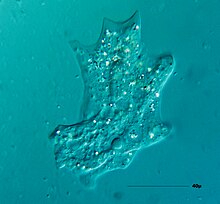

In biology, an organism (from Ancient Greek ὄργανον (órganon) 'instrument, implement, tool', and -ισμός (-ismós)) is any organic, living system that functions as an private entity.[1] All organisms are composed of cells (prison cell theory).[1] Organisms are classified past taxonomy into groups such every bit multicellular animals, plants, and fungi; or unicellular microorganisms such every bit protists, bacteria, and archaea.[ii] All types of organisms are capable of reproduction, growth and evolution, maintenance, and some degree of response to stimuli. Beetles, squids, tetrapods, mushrooms, and vascular plants are examples of multicellular organisms that differentiate specialized tissues and organs during development.
A unicellular organism may exist either a prokaryote or a eukaryote. Prokaryotes are represented past two separate domains – bacteria and archaea. Eukaryotic organisms are characterized past the presence of a membrane-spring cell nucleus and contain additional membrane-bound compartments called organelles (such as mitochondria in animals and plants and plastids in plants and algae, all generally considered to be derived from endosymbiotic leaner).[3] Fungi, animals and plants are examples of kingdoms of organisms within the eukaryotes.
Estimates on the number of World's current species range from 2 million to ane trillion,[4] of which over 1.7 million have been documented.[5] More than 99% of all species, amounting to over five billion species,[half dozen] that e'er lived are estimated to be extinct.[7] [8]
In 2016, a set of 355 genes from the concluding universal common antecedent (LUCA) of all organisms was identified.[9] [10]
Etymology [edit]
The term "organism" (from Greek ὀργανισμός, organismos, from ὄργανον, organon, i.e. "instrument, implement, tool, organ of sense or apprehension")[11] [12] first appeared in the English language linguistic communication in 1703 and took on its electric current definition by 1834 (Oxford English Lexicon). It is directly related to the term "organization". There is a long tradition of defining organisms as cocky-organizing beings, going back at least to Immanuel Kant'south 1790 Critique of Judgment.[13]
Definitions [edit]
An organism may be defined as an assembly of molecules functioning as a more or less stable whole that exhibits the properties of life. Dictionary definitions tin be broad, using phrases such as "whatever living structure, such as a establish, animal, fungus or bacterium, capable of growth and reproduction".[14] Many definitions exclude viruses and possible human being-made non-organic life forms, equally viruses are dependent on the biochemical machinery of a host prison cell for reproduction.[xv] A superorganism is an organism consisting of many individuals working together as a single functional or social unit.[16]
There has been controversy virtually the best way to ascertain the organism[17] [18] [xix] [xx] [21] [22] [23] [24] [25] [26] and indeed virtually whether or not such a definition is necessary.[27] [28] Several contributions[29] are responses to the suggestion that the category of "organism" may well non be adequate in biology.[30] [ page needed ]
Viruses [edit]
Viruses are not typically considered to be organisms considering they are incapable of autonomous reproduction, growth or metabolism. Although some organisms are too incapable of independent survival and live as obligatory intracellular parasites, they are capable of independent metabolism and procreation. Although viruses have a few enzymes and molecules feature of living organisms, they have no metabolism of their own; they cannot synthesize and organize the organic compounds from which they are formed. Naturally, this rules out democratic reproduction: they can just be passively replicated by the machinery of the host cell. In this sense, they are like to inanimate affair.
While viruses sustain no independent metabolism and thus are usually not classified as organisms, they do accept their own genes, and they do evolve by mechanisms similar to the evolutionary mechanisms of organisms. Thus, an argument that viruses should exist classed as living organisms is their ability to undergo development and replicate through self-assembly. All the same, some scientists argue that viruses neither evolve nor self-reproduce. Instead, viruses are evolved by their host cells, significant that there was co-development of viruses and host cells. If host cells did non exist, viral evolution would be impossible. This is not true for cells. If viruses did not exist, the direction of cellular development could be different, but cells would withal be able to evolve. Equally for reproduction, viruses totally rely on hosts' machinery to replicate.[31] The discovery of viruses with genes coding for energy metabolism and protein synthesis fuelled the debate nearly whether viruses are living organisms. The presence of these genes suggested that viruses were once able to metabolize. Still, information technology was constitute subsequently that the genes coding for energy and protein metabolism have a cellular origin. About likely, these genes were caused through horizontal gene transfer from viral hosts.[31]
Chemical science [edit]
Organisms are complex chemical systems, organized in ways that promote reproduction and some measure of sustainability or survival. The aforementioned laws that govern non-living chemistry govern the chemic processes of life. It is generally the phenomena of entire organisms that determine their fitness to an environment and therefore the survival of their DNA-based genes.
Organisms conspicuously owe their origin, metabolism, and many other internal functions to chemical phenomena, peculiarly the chemistry of big organic molecules. Organisms are complex systems of chemic compounds that, through interaction and environment, play a wide variety of roles.
Organisms are semi-closed chemical systems. Although they are private units of life (as the definition requires), they are non closed to the environment around them. To operate they constantly take in and release free energy. Autotrophs produce usable free energy (in the form of organic compounds) using light from the lord's day or inorganic compounds while heterotrophs accept in organic compounds from the surroundings.
The primary chemical chemical element in these compounds is carbon. The chemical properties of this chemical element such every bit its keen analogousness for bonding with other small atoms, including other carbon atoms, and its small size making it capable of forming multiple bonds, get in platonic as the ground of organic life. It is able to course small three-atom compounds (such as carbon dioxide), likewise equally large chains of many thousands of atoms that can store information (nucleic acids), agree cells together, and transmit information (protein).
Macromolecules [edit]
Compounds that make up organisms may exist divided into macromolecules and other, smaller molecules. The four groups of macromolecule are nucleic acids, proteins, carbohydrates and lipids. Nucleic acids (specifically dna, or Deoxyribonucleic acid) shop genetic data as a sequence of nucleotides. The item sequence of the four different types of nucleotides (adenine, cytosine, guanine, and thymine) dictate many characteristics that constitute the organism. The sequence is divided upward into codons, each of which is a particular sequence of three nucleotides and corresponds to a particular amino acid. Thus a sequence of Dna codes for a detail protein that, due to the chemic properties of the amino acids it is made from, folds in a particular manner so performs a particular part.
These protein functions have been recognized:
- Enzymes, which catalyze the reactions of metabolism
- Structural proteins, such as tubulin, or collagen
- Regulatory proteins, such every bit transcription factors or cyclins that regulate the cell bicycle
- Signaling molecules or their receptors such equally some hormones and their receptors
- Defensive proteins, which can include everything from antibodies of the allowed system, to toxins (e.g., dendrotoxins of snakes), to proteins that include unusual amino acids similar canavanine
A bilayer of phospholipids makes up the membrane of cells that constitutes a barrier, containing everything inside a cell and preventing compounds from freely passing into, and out of, the cell. Due to the selective permeability of the phospholipid membrane, only specific compounds can laissez passer through information technology.
Structure [edit]
All organisms consist of structural units called cells; some contain a single prison cell (unicellular) and others contain many units (multicellular). Multicellular organisms are able to specialize cells to perform specific functions. A group of such cells is a tissue, and in animals these occur every bit iv basic types, namely epithelium, nervous tissue, muscle tissue, and connective tissue. Several types of tissue piece of work together in the form of an organ to produce a particular role (such as the pumping of the blood by the heart, or as a barrier to the environment as the pare). This pattern continues to a higher level with several organs functioning as an organ organisation such as the reproductive arrangement, and digestive arrangement. Many multicellular organisms consist of several organ systems, which coordinate to permit for life.
Cell [edit]
The cell theory, first developed in 1839 by Schleiden and Schwann, states that all organisms are composed of one or more cells; all cells come up from preexisting cells, and cells contain the hereditary information necessary for regulating cell functions and for transmitting information to the next generation of cells.
There are ii types of cells, eukaryotic and prokaryotic. Prokaryotic cells are usually singletons, while eukaryotic cells are usually found in multicellular organisms. Prokaryotic cells lack a nuclear membrane so DNA is unbound within the cell; eukaryotic cells have nuclear membranes.
All cells, whether prokaryotic or eukaryotic, have a membrane, which envelops the prison cell, separates its interior from its environment, regulates what moves in and out, and maintains the electric potential of the cell. Inside the membrane, a salty cytoplasm takes upwardly most of the cell volume. All cells possess DNA, the hereditary material of genes, and RNA, containing the information necessary to build various proteins such equally enzymes, the prison cell's main machinery. There are likewise other kinds of biomolecules in cells.
All cells share several similar characteristics of:[32]
- Reproduction by cell partitioning (binary fission, mitosis or meiosis).
- Apply of enzymes and other proteins coded past DNA genes and fabricated via messenger RNA intermediates and ribosomes.
- Metabolism, including taking in raw materials, edifice prison cell components, converting energy, molecules and releasing by-products. The functioning of a prison cell depends upon its ability to extract and apply chemical energy stored in organic molecules. This energy is derived from metabolic pathways.
- Response to external and internal stimuli such every bit changes in temperature, pH or food levels.
- Cell contents are contained within a cell surface membrane that contains proteins and a lipid bilayer.
Evolutionary history [edit]
Final universal common ancestor [edit]

The last universal mutual ancestor (LUCA) is the most recent organism from which all organisms now living on Earth descend.[33] Thus information technology is the near recent common ancestor of all current life on Earth. The LUCA is estimated to accept lived some 3.5 to 3.8 billion years agone (sometime in the Paleoarchean era).[34] [35] The primeval evidence for life on Globe is graphite found to be biogenic in three.7 billion-year-old metasedimentary rocks discovered in Western Greenland[36] and microbial mat fossils institute in iii.48 billion-yr-quondam sandstone discovered in Western Australia.[37] [38] Although more than 99 percent of all species that always lived on the planet are estimated to be extinct,[vii] [8] it is likely that more than a billion species of life exist on Earth currently, with the highest estimates and projections reaching ane trillion species.[4]
Information virtually the early evolution of life includes input from many different fields, including geology and planetary science. These sciences provide data virtually the history of the Globe and the changes produced by life. However, a great deal of data about the early World has been destroyed by geological processes over the grade of fourth dimension.
All organisms are descended from a common ancestor or ancestral gene puddle. Evidence for common descent may be found in traits shared between all living organisms. In Darwin's twenty-four hours, the bear witness of shared traits was based solely on visible observation of morphologic similarities, such as the fact that all birds accept wings, fifty-fifty those that do not fly.
In that location is strong testify from genetics that all organisms have a mutual ancestor. For case, every living cell makes use of nucleic acids as its genetic material, and uses the aforementioned 20 amino acids every bit the building blocks for proteins. All organisms apply the same genetic code (with some extremely rare and small-scale deviations) to translate nucleic acrid sequences into proteins. The universality of these traits strongly suggests common ancestry, because the option of many of these traits seems arbitrary. Horizontal cistron transfer makes information technology more difficult to study the last universal ancestor.[39] However, the universal use of the same genetic code, same nucleotides, and aforementioned amino acids makes the beingness of such an ancestor overwhelmingly likely.[40]
Phylogeny [edit]
Location of the root [edit]

The about commonly accepted location of the root of the tree of life is between a monophyletic domain Leaner and a clade formed by Archaea and Eukaryota of what is referred to as the "traditional tree of life" based on several molecular studies.[41] [42] [43] [44] [45] [46] A very small-scale minority of studies accept concluded differently, namely that the root is in the domain Bacteria, either in the phylum Firmicutes[47] or that the phylum Chloroflexi is basal to a clade with Archaea and Eukaryotes and the rest of Leaner equally proposed by Thomas Condescending-Smith.[48]
Research published in 2016, by William F. Martin, by genetically analyzing 6.1 million protein-coding genes from sequenced prokaryotic genomes of diverse phylogenetic copse, identified 355 poly peptide clusters from amongst 286,514 protein clusters that were probably common to the LUCA. The results "describe LUCA as anaerobic, CO2-fixing, H2-dependent with a Wood–Ljungdahl pathway (the reductive acetyl-coenzyme A pathway), N2-fixing and thermophilic. LUCA's biochemistry was replete with FeS clusters and radical reaction mechanisms. Its cofactors reveal dependence upon transition metals, flavins, S-adenosyl methionine, coenzyme A, ferredoxin, molybdopterin, corrins and selenium. Its genetic code required nucleoside modifications and Due south-adenosylmethionine-dependent methylations." The results depict methanogenic clostria as a basal clade in the 355 lineages examined, and suggest that the LUCA inhabited an anaerobic hydrothermal vent setting in a geochemically active surround rich in H2, CO2, and iron.[9] However, the identification of these genes every bit being present in LUCA was criticized, suggesting that many of the proteins causeless to be present in LUCA represent later horizontal gene transfers between archaea and leaner.[49]
Reproduction [edit]
Sexual reproduction is widespread amidst current eukaryotes, and was likely nowadays in the last common ancestor.[50] This is suggested past the finding of a cadre set up of genes for meiosis in the descendants of lineages that diverged early from the eukaryotic evolutionary tree.[51] and Malik et al.[52] It is further supported past evidence that eukaryotes previously regarded as "aboriginal asexuals", such equally Amoeba, were likely sexual in the past, and that most present day asexual amoeboid lineages likely arose recently and independently.[53]
In prokaryotes, natural bacterial transformation involves the transfer of Dna from ane bacterium to another and integration of the donor Deoxyribonucleic acid into the recipient chromosome by recombination. Natural bacterial transformation is considered to be a archaic sexual process and occurs in both leaner and archaea, although it has been studied mainly in leaner. Transformation is clearly a bacterial adaptation and not an accidental occurrence, considering it depends on numerous gene products that specifically collaborate with each other to enter a state of natural competence to perform this circuitous procedure.[54] Transformation is a common manner of Deoxyribonucleic acid transfer amongst prokaryotes.[55]
Horizontal gene transfer [edit]
The beginnings of living organisms has traditionally been reconstructed from morphology, but is increasingly supplemented with phylogenetics – the reconstruction of phylogenies by the comparison of genetic (DNA) sequence.
Sequence comparisons propose recent horizontal transfer of many genes amidst diverse species including beyond the boundaries of phylogenetic "domains". Thus determining the phylogenetic history of a species can not be done conclusively by determining evolutionary copse for single genes.[56]
Biologist Peter Gogarten suggests "the original metaphor of a tree no longer fits the data from recent genome research", therefore "biologists (should) utilize the metaphor of a mosaic to draw the different histories combined in individual genomes and use (the) metaphor of a internet to visualize the rich exchange and cooperative effects of HGT amongst microbes."[57]
Future of life (cloning and synthetic organisms) [edit]
Mod biotechnology is challenging traditional concepts of organisms and species. Cloning is the process of creating a new multicellular organism, genetically identical to another, with the potential of creating entirely new species of organisms. Cloning is the subject of much ethical debate.
In 2008, the J. Craig Venter Institute assembled a constructed bacterial genome, Mycoplasma genitalium, by using recombination in yeast of 25 overlapping Dna fragments in a single step. The utilise of yeast recombination greatly simplifies the assembly of large Dna molecules from both synthetic and natural fragments.[58] Other companies, such as Constructed Genomics, take already been formed to accept advantage of the many commercial uses of custom designed genomes.
See as well [edit]
- Earliest known life forms
References [edit]
- ^ a b Mosby'southward Lexicon of Medicine, Nursing and Wellness Professions (10th ed.). St. Louis, Missouri: Elsevier. 2017. p. 1281. ISBN9780323222051.
- ^ Hine, RS. (2008). A dictionary of biological science (6th ed.). Oxford: Oxford University Press. p. 461. ISBN978-0-19-920462-5.
- ^ Cavalier-Smith T. (1987). "The origin of eukaryotic and archaebacterial cells". Annals of the New York Academy of Sciences. 503 (1): 17–54. Bibcode:1987NYASA.503...17C. doi:10.1111/j.1749-6632.1987.tb40596.x. PMID 3113314. S2CID 38405158.
- ^ a b Brendan B. Larsen; Elizabeth C. Miller; Matthew 1000. Rhodes; John J. Wiens (September 2017). "Inordinate Fondness Multiplied and Distributed:The Number of Species on Globe and the New Pie of Life" (PDF). The Quarterly Review of Biological science. 92 (3): 230. Retrieved eleven November 2019.
- ^ Anderson, Alyssa K. (2018). "Describing the Undiscovered". Chironomus: Journal of Chironomidae Research (31): 2–3. doi:10.5324/cjcr.v0i31.2887.
- ^ Kunin, W.E.; Gaston, Kevin, eds. (1996). The Biology of Rarity: Causes and consequences of rare – common differences. ISBN978-0-412-63380-5 . Retrieved 26 May 2015.
- ^ a b Stearns, Beverly Peterson; Stearns, South.C.; Stearns, Stephen C. (2000). Watching, from the Border of Extinction. Yale University Printing. p. preface x. ISBN978-0-300-08469-half-dozen . Retrieved thirty May 2017.
- ^ a b Novacek, Michael J. (8 Nov 2014). "Prehistory's Brilliant Hereafter". New York Times . Retrieved 25 December 2014.
- ^ a b Weiss, Madeline C.; Sousa, Filipa Fifty.; Mrnjavac, Natalia; Neukirchen, Sinje; Roettger, Mayo; Nelson-Sathi, Shijulal; Martin, William F. (2016). "The physiology and habitat of the last universal mutual ancestor". Nature Microbiology. 1 (9): 16116. doi:10.1038/nmicrobiol.2016.116. PMID 27562259. S2CID 2997255.
- ^ Wade, Nicholas (25 July 2016). "See Luca, the Ancestor of All Living Things". The New York Times . Retrieved 25 July 2016.
- ^ ὄργανον . Liddell, Henry George; Scott, Robert; A Greek–English Lexicon at the Perseus Project
- ^ "organism". Online Etymology Dictionary.
- ^ Kant I., Critique of Judgment: §64.
- ^ "organism". Chambers 21st Century Dictionary (online ed.). 1999.
- ^ "organism". Oxford English Dictionary (Online ed.). Oxford University Press. 2004. (Subscription or participating institution membership required.)
- ^ Kelly, Kevin (1994). Out of control: the new biology of machines, social systems and the economic world . Boston: Addison-Wesley. pp. 98. ISBN978-0-201-48340-6.
- ^ Dupré, J. (2010). "The polygenomic organism". The Sociological Review. 58: nineteen–99. doi:10.1111/j.1467-954X.2010.01909.10. S2CID 142512990.
- ^ Folse Hj, three.; Roughgarden, J. (2010). "What is an private organism? A multilevel selection perspective". The Quarterly Review of Biology. 85 (4): 447–472. doi:10.1086/656905. PMID 21243964. S2CID 19816447.
{{cite journal}}: CS1 maint: numeric names: authors list (link) - ^ Pradeu, T. (2010). "What is an organism? An immunological respond". History and Philosophy of the Life Sciences. 32 (two–3): 247–267. PMID 21162370.
- ^ Clarke, East. (2010). "The problem of biological individuality". Biological Theory. five (4): 312–325. doi:x.1162/BIOT_a_00068. S2CID 28501709.
- ^ Gardner, A.; Grafen, A. (2009). "Capturing the superorganism: A formal theory of group accommodation". Journal of Evolutionary Biology. 22 (4): 659–671. doi:10.1111/j.1420-9101.2008.01681.x. PMID 19210588. S2CID 8413751.
- ^ Michod, R E (1999). Darwinian dynamics: evolutionary transitions in fettle and individuality. Princeton University Press. ISBN978-0-691-05011-ix.
- ^ Queller, D.C.; J.E. Strassmann (2009). "Across society: the evolution of organismality". Philosophical Transactions of the Majestic Social club B: Biological Sciences. 364 (1533): 3143–3155. doi:10.1098/rstb.2009.0095. PMC2781869. PMID 19805423.
- ^ Santelices B. (1999). "How many kinds of individual are there?". Trends in Ecology & Development. fourteen (4): 152–155. doi:x.1016/s0169-5347(98)01519-5. PMID 10322523.
- ^ Wilson, R (2007). "The biological notion of private". Stanford Encyclopedia of Philosophy.
- ^ Longo, Giuseppe; Montévil, Maël (2014). Perspectives on Organisms – Springer. Lecture Notes in Morphogenesis. doi:10.1007/978-3-642-35938-5. ISBN978-3-642-35937-8. S2CID 27653540.
- ^ Pepper, J.W.; M.D. Herron (2008). "Does biology need an organism concept?". Biological Reviews. 83 (4): 621–627. doi:10.1111/j.1469-185X.2008.00057.x. PMID 18947335. S2CID 4942890.
- ^ Wilson, J (2000). "Ontological butchery: organism concepts and biological generalizations". Philosophy of Scientific discipline. 67: 301–311. doi:10.1086/392827. JSTOR 188676. S2CID 84168536.
- ^ Bateson, P. (2005). "The return of the whole organism". Journal of Biosciences. 30 (1): 31–39. doi:10.1007/BF02705148. PMID 15824439. S2CID 26656790.
- ^ Dawkins, Richard (1982). The Extended Phenotype. Oxford Academy Printing. ISBN978-0-19-286088-0.
- ^ a b Moreira, D.; López-García, P.N. (2009). "Ten reasons to exclude viruses from the tree of life". Nature Reviews Microbiology. seven (4): 306–311. doi:ten.1038/nrmicro2108. PMID 19270719. S2CID 3907750.
- ^ The Universal Features of Cells on Earth in Chapter 1 of Molecular Biology of the Cell fourth edition, edited by Bruce Alberts (2002) published by Garland Scientific discipline.
- ^ Theobald, D.L.I (2010), "A formal test of the theory of universal mutual ancestry", Nature, 465 (7295): 219–222, Bibcode:2010Natur.465..219T, doi:10.1038/nature09014, PMID 20463738, S2CID 4422345
- ^ Doolittle, Westward.F. (2000), "Uprooting the tree of life" (PDF), Scientific American, 282 (6): 90–95, Bibcode:2000SciAm.282b..90D, doi:10.1038/scientificamerican0200-90, PMID 10710791, archived from the original (PDF) on 31 January 2011.
- ^ Glansdorff, North.; Xu, Y; Labedan, B. (2008), "The Last Universal Common Antecedent: Emergence, constitution and genetic legacy of an elusive precursor", Biology Direct, iii: 29, doi:x.1186/1745-6150-3-29, PMC2478661, PMID 18613974.
- ^ Yoko Ohtomo; Takeshi Kakegawa; Akizumi Ishida; Toshiro Nagase; Minik T. Rosing (8 December 2013). "Evidence for biogenic graphite in early on Archaean Isua metasedimentary rocks". Nature Geoscience. 7 (1): 25–28. Bibcode:2014NatGe...vii...25O. doi:10.1038/ngeo2025.
- ^ Borenstein, Seth (13 November 2013). "Oldest fossil constitute: Meet your microbial mom". AP News . Retrieved 15 Nov 2013.
- ^ Noffke, Nora; Christian, Daniel; Wacey, David; Hazen, Robert M. (eight November 2013). "Microbially Induced Sedimentary Structures Recording an Ancient Ecosystem in the ca. three.48 Billion-Year-Quondam Dresser Formation, Pilbara, Western Australia". Astrobiology. thirteen (12): 1103–1124. Bibcode:2013AsBio..xiii.1103N. doi:x.1089/ast.2013.1030. PMC3870916. PMID 24205812.
- ^ Doolittle, W. Ford (2000). "Uprooting the tree of life" (PDF). Scientific American. 282 (6): 90–95. Bibcode:2000SciAm.282b..90D. doi:10.1038/scientificamerican0200-90. PMID 10710791. Archived from the original (PDF) on 7 September 2006.
- ^ Theobald, Douglas L. (xiii May 2010), "A formal test of the theory of universal common ancestry", Nature, 465 (7295): 219–222, Bibcode:2010Natur.465..219T, doi:10.1038/nature09014, ISSN 0028-0836, PMID 20463738, S2CID 4422345.
- ^ Chocolate-brown, J.R.; Doolittle, Westward.F. (1995). "Root of the Universal Tree of Life Based on Aboriginal Aminoacyl-tRNA Synthetase Gene Duplications". Proc Natl Acad Sci U Due south A. 92 (7): 2441–2445. Bibcode:1995PNAS...92.2441B. doi:10.1073/pnas.92.7.2441. PMC42233. PMID 7708661.
- ^ Gogarten, J.P.; Kibak, H.; Dittrich, P.; Taiz, 50.; Bowman, E.J.; Bowman, B.J.; Manolson, M.F.; et al. (1989). "Evolution of the Vacuolar H+-ATPase: Implications for the Origin of Eukaryotes". Proc Natl Acad Sci U S A. 86 (17): 6661–6665. Bibcode:1989PNAS...86.6661G. doi:10.1073/pnas.86.17.6661. PMC297905. PMID 2528146.
- ^ Gogarten, J.P.; Taiz, L. (1992). "Evolution of Proton Pumping ATPases: Rooting the Tree of Life". Photosynthesis Research. 33 (2): 137–146. doi:10.1007/BF00039176. PMID 24408574. S2CID 20013957.
- ^ Gribaldo, Due south; Cammarano, P (1998). "The Root of the Universal Tree of Life Inferred from Aforetime Duplicated Genes Encoding Components of the Protein-Targeting Mechanism". Journal of Molecular Evolution. 47 (5): 508–516. Bibcode:1998JMolE..47..508G. doi:10.1007/pl00006407. PMID 9797401. S2CID 21087045.
- ^ Iwabe, Naoyuki; Kuma, Kei-Ichi; Hasegawa, Masami; Osawa, Syozo; Miyata Source, Takashi; Hasegawa, Masami; Osawa, Syozo; Miyata, Takashi (1989). "Evolutionary Relationship of Archaebacteria, Eubacteria, and Eukaryotes Inferred from Phylogenetic Copse of Duplicated Genes". Proc Natl Acad Sci U S A. 86 (23): 9355–9359. Bibcode:1989PNAS...86.9355I. doi:10.1073/pnas.86.23.9355. PMC298494. PMID 2531898.
- ^ Boone, David R.; Castenholz, Richard W.; Garrity, George M., eds. (2001). The Archaea and the Deeply Branching and Phototrophic Leaner . Bergey'due south Manual of Systematic Bacteriology. Springer. doi:x.1007/978-0-387-21609-6. ISBN978-0-387-21609-vi. S2CID 41426624. [ page needed ]
- ^ Valas, R.E.; Bourne, P.Due east. (2011). "The origin of a derived superkingdom: how a gram-positive bacterium crossed the desert to become an archaeon". Biological science Direct. 6: xvi. doi:x.1186/1745-6150-6-sixteen. PMC3056875. PMID 21356104.
- ^ Cavalier-Smith T (2006). "Rooting the tree of life past transition analyses". Biology Direct. ane: nineteen. doi:10.1186/1745-6150-1-xix. PMC1586193. PMID 16834776.
- ^ Gogarten, JP; Deamer, D (Nov 2016). "Is LUCA a thermophilic progenitor?". Nat Microbiol. ane (12): 16229. doi:10.1038/nmicrobiol.2016.229. PMID 27886195. S2CID 205428194.
- ^ Dacks J; Roger AJ (June 1999). "The commencement sexual lineage and the relevance of facultative sex". J. Mol. Evol. 48 (6): 779–783. Bibcode:1999JMolE..48..779D. doi:10.1007/PL00013156. PMID 10229582. S2CID 9441768.
- ^ Ramesh MA; Malik SB; Logsdon JM (January 2005). "A phylogenomic inventory of meiotic genes; evidence for sex in Giardia and an early eukaryotic origin of meiosis". Curr. Biol. fifteen (two): 185–191. doi:x.1016/j.cub.2005.01.003. PMID 15668177. S2CID 17013247.
- ^ Malik SB; Pightling AW; Stefaniak LM; Schurko AM; Logsdon JM (2008). "An expanded inventory of conserved meiotic genes provides show for sex in Trichomonas vaginalis". PLOS One. iii (eight): e2879. Bibcode:2008PLoSO...3.2879M. doi:10.1371/journal.pone.0002879. PMC2488364. PMID 18663385.
- ^ Lahr DJ; Parfrey LW; Mitchell EA; Katz LA; Lara Eastward (July 2011). "The guiltlessness of amoebae: re-evaluating evidence for sexual activity in amoeboid organisms". Proc. Biol. Sci. 278 (1715): 2081–2090. doi:10.1098/rspb.2011.0289. PMC3107637. PMID 21429931.
- ^ Chen I; Dubnau D (March 2004). "DNA uptake during bacterial transformation". Nat. Rev. Microbiol. 2 (3): 241–249. doi:x.1038/nrmicro844. PMID 15083159. S2CID 205499369.
- ^ Johnsborg O; Eldholm V; Håvarstein LS (December 2007). "Natural genetic transformation: prevalence, mechanisms and function". Res. Microbiol. 158 (ten): 767–778. doi:10.1016/j.resmic.2007.09.004. PMID 17997281.
- ^ Oklahoma Land – Horizontal Cistron Transfer
- ^ Peter Gogarten. "Horizontal Gene Transfer – A New Paradigm for Biological science". esalenctr.org. Retrieved 20 August 2011.
- ^ Gibsona, Daniel Grand.; Benders, Gwynedd A.; Axelroda, Kevin C.; et al. (2008). "One-step associates in yeast of 25 overlapping DNA fragments to form a consummate synthetic Mycoplasma genitalium genome". PNAS. 105 (51): 20404–20409. Bibcode:2008PNAS..10520404G. doi:10.1073/pnas.0811011106. PMC2600582. PMID 19073939.
External links [edit]
- BBCNews: 27 September 2000, When slime is non so thick Citat: "Information technology ways that some of the lowliest creatures in the plant and animal kingdoms, such as slime and amoeba, may not be every bit primitive as once idea"
- SpaceRef.com, July 29, 1997: Scientists Discover Marsh gas Ice Worms On Gulf Of United mexican states Ocean Floor
- The Eberly College of Science: Methane Ice Worms discovered on Gulf of Mexico Body of water Floor download Publication-quality photos
- Artikel, 2000: Methane Ice Worms: Hesiocaeca methanicola. Colonizing Fossil Fuel Reserves
- SpaceRef.com, May 04, 2001: Redefining "Life as We Know it" Hesiocaeca methanicola In 1997, Charles Fisher, professor of biology at Penn State, discovered this remarkable creature living on mounds of marsh gas water ice under half a mile of ocean on the flooring of the Gulf of Mexico.
- SpaceRef.com, July 29, 1997: Scientists Discover Marsh gas Ice Worms On Gulf Of United mexican states Ocean Floor
- BBCNews, eighteen December 2002, 'Infinite bugs' grown in lab Citat: "Bacillus simplex and Staphylococcus pasteuri...Engyodontium album The strains cultured by Dr Wainwright seemed to be resistant to the furnishings of UV – 1 quality required for survival in infinite"
- BBCNews, 19 June 2003, Ancient organism challenges cell evolution Citat: "It appears that this organelle has been conserved in evolution from prokaryotes to eukaryotes, since it is present in both"
- Interactive Syllabus for Full general Biology – BI 04, Saint Anselm College, Summertime 2003
- Jacob Feldman: Stramenopila
- NCBI Taxonomy entry: root
- Saint Anselm Higher: Survey of representatives of the major Kingdoms Citat: "Number of kingdoms has non been resolved...Bacteria present a problem with their diversity...Protista present a problem with their diversity...",
- Species 2000 Indexing the world'due south known species. Species 2000 has the objective of enumerating all known species of plants, animals, fungi and microbes on World equally the baseline dataset for studies of global biodiversity. It will likewise provide a unproblematic access point enabling users to link from hither to other information systems for all groups of organisms, using direct species-links.
- The largest organism in the world may be a fungus rug near ten square kilometers of an Oregon wood, and may exist as quondam as 10500 years.
- The Tree of Life
- Frequent questions from kids near life and their answers
Source: https://en.wikipedia.org/wiki/Organism
0 Response to "How to Know if You Organism"
Postar um comentário